
Punjab Crop Insurance Scheme 2025
Punjab Crop Insurance Scheme 2025 Agriculture in Punjab is the backbone of the provincial and national economy, providing food security and employment to millions. However, farmers face multiple challenges every season, including unexpected floods, droughts, pest attacks, and changing weather patterns. These natural and environmental risks often result in heavy crop losses, forcing farmers into debt or discouraging them from farming altogether.

To address this long-standing issue, the Punjab government has introduced the Punjab Crop Insurance Scheme 2025. This initiative is a government-backed safety net designed to provide compensation to farmers in case of crop damage caused by natural disasters. The scheme is unique because it offers free coverage for small farmers and subsidized insurance for larger landholders, making it accessible for all categories of farmers. By securing their income, the government aims to promote sustainable farming and improve overall agricultural productivity in Punjab.

You Can Also Read: BISP 8171 September 2025 Update | Rs. 16,500 Installments
What is Punjab Crop Insurance Scheme 2025?
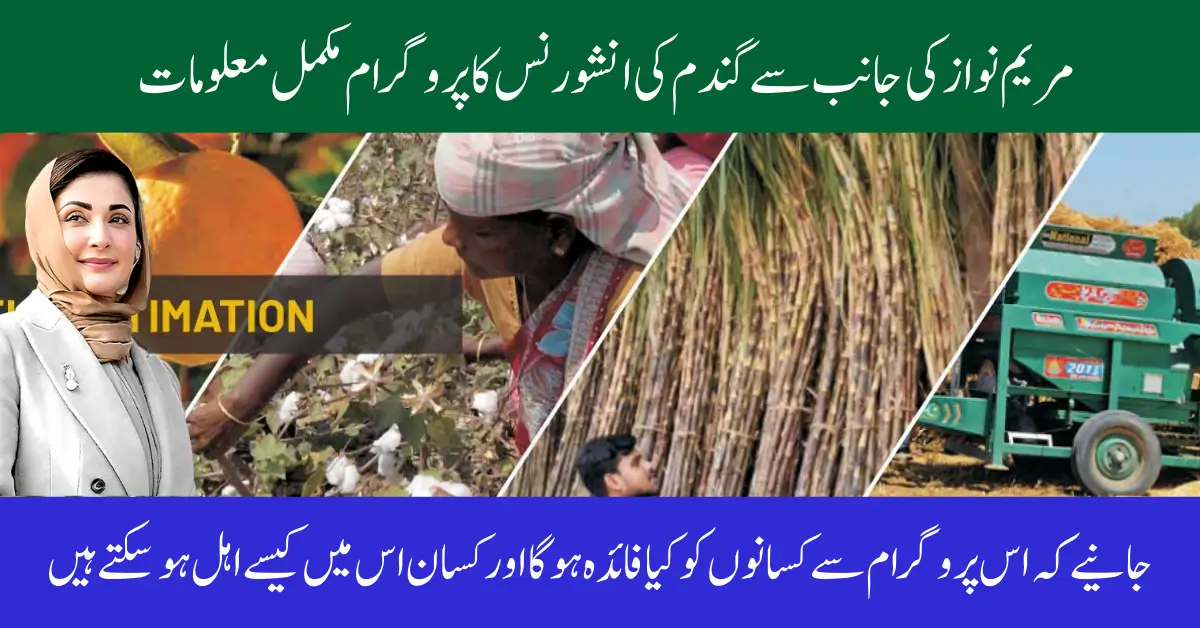
The Punjab Crop Insurance Scheme 2025 is a fully subsidized insurance program that provides financial protection to farmers against crop losses. Unlike traditional insurance programs, this scheme is tailored specifically for the needs of Punjab’s farmers, ensuring coverage for the most vulnerable and commonly grown crops such as wheat, rice, sugarcane, and cotton.

This program reduces financial stress for farmers by compensating them after verified crop losses. The goal is not just to provide temporary relief but also to create long-term stability in the agricultural sector. By safeguarding incomes, the scheme encourages more people to invest in farming and prevents farmers from falling into cycles of debt when disasters strike.
Key highlights of the scheme include:
- Free insurance for small landholding farmers.
- Subsidized premiums for medium and large-scale farmers.
- Compensation against floods, droughts, pest attacks, and heavy rainfall.
- A streamlined application process with both online and offline options.
You Can Also Read: Maryam Ki Sawari 2025 – Complete
Key Benefits of Punjab Crop Insurance Scheme
The scheme offers a wide range of benefits that directly address the core issues faced by farmers. Its primary objective is to give farmers peace of mind and the assurance that their efforts will not go to waste due to unpredictable weather or disasters.
One of the greatest advantages is that small farmers are fully exempted from paying any premium. This ensures that the poorest farming households—those most vulnerable to risk—get maximum protection without worrying about costs. For larger farmers, subsidized premiums make insurance affordable while still covering major risks.
Benefits farmers can expect:
- Financial security: Farmers are compensated for verified crop losses.
- Debt prevention: Reduces reliance on informal loans after disasters.
- Encouragement for farming: More people will invest in agriculture confidently.
- Sustainability: Ensures long-term stability in crop production.
- Food security: Stable farming contributes to Punjab’s food supply chain.
By addressing financial risks, the scheme creates a ripple effect—helping households, stabilizing markets, and strengthening Punjab’s agricultural economy.
You Can Also Read: Punjab Raises Minimum Wage to Rs. 40,000 Daily
Eligibility Criteria for Farmers
Not all farmers automatically qualify for this scheme; specific eligibility conditions apply. The program is designed to prioritize small and medium farmers, as they are the most vulnerable to financial shocks caused by crop damage. Larger farmers are also eligible but must contribute through subsidized premiums.
To apply, farmers must be residents of Punjab and have proof of landholding, whether owned or leased. The scheme also covers tenant farmers provided they have valid lease documentation. Crops included in this program are wheat, rice, sugarcane, cotton, and other seasonal crops declared by the government.
Table: Punjab Crop Insurance Eligibility and Requirements
| Requirement | Details |
|---|---|
| Residency | Must be a Punjab resident |
| Priority | Small & medium farmers |
| Landholding | Free coverage up to a defined limit |
| Crops covered | Wheat, rice, sugarcane, cotton, seasonal crops |
| Documents required | CNIC, land ownership/lease papers, crop details |
This table provides a quick summary for farmers, but they must carefully prepare all required documents before applying to avoid delays during verification.
You Can Also Read: Google Gemini Nano Banana AI Saree Trend
Crops Covered Under the Scheme
The scheme primarily covers Punjab’s major staple and cash crops. This ensures that both food crops for local consumption and cash crops for trade are protected. Farmers growing these crops can have confidence that natural disasters won’t completely wipe out their hard work.
The government has chosen these crops strategically because they make up a significant portion of Punjab’s economy. Wheat and rice form the backbone of food security, while cotton and sugarcane are vital for industry and exports. Seasonal crops are also included, giving coverage flexibility depending on the agricultural calendar.
Crops included:
- Wheat
- Rice
- Sugarcane
- Cotton
- Seasonal crops (as notified by government authorities)
Documents Required for Application
To complete registration smoothly, farmers must prepare all necessary documents in advance. Missing or incorrect documentation is one of the most common reasons for application delays or rejections.
You Can Also Read: CM Punjab Kissan Card Scheme 2025
The most important requirement is a valid CNIC, along with proof of landholding such as ownership or lease papers. Farmers must also provide accurate crop details, including acreage and type of crop, so authorities can assess eligibility correctly. An active mobile number is essential to receive updates, while a passport-size photo may be requested depending on the registration channel.
Checklist of required documents:
- Valid CNIC of the applicant.
- Proof of land ownership or lease agreement.
- Details of crops being cultivated and acreage.
- Active mobile number for registration and communication.
- Passport-size photo (if required).
How to Apply Online – Step-by-Step Guide
The Punjab government has simplified the application process by introducing an online registration portal. Farmers with internet access can complete the entire process from home, saving time and effort.
Step-by-step process:
- Visit the official Punjab Crop Insurance Scheme 2025 portal.
- Register by entering your CNIC number and mobile details.
- Provide crop and farm information, including acreage and type of crop.
- Upload all required documents such as CNIC, land papers, and crop details.
- Submit the application and save the reference number for tracking.
- Wait for authorities to verify and approve the application.
For farmers without internet access, the scheme also provides offline application options through local agriculture offices and partner banks. This ensures no farmer is excluded due to lack of technology access.
You Can Also Read: CM Punjab Veterinary Internship Program 2025
Verification and Compensation Process
After applying, farmers must wait for verification of their details. This step ensures transparency and prevents fraudulent claims. Once a farmer suffers crop damage, they must report it promptly to the local authorities.
The government then sends an inspection team to assess the extent of damage. Based on this assessment, the farmer’s claim is either approved or rejected. Once approved, compensation is released directly to the farmer’s account, ensuring quick and fair financial relief.
This process creates accountability, as officials must document the verification, and farmers are assured that compensation will be provided based on genuine losses rather than political favoritism.
Premiums and Subsidies Explained
One of the unique aspects of this scheme is its tiered premium system. Instead of a one-size-fits-all approach, the government designed the scheme to favor small farmers while still including larger ones.
Small farmers are given free coverage, meaning they do not pay any premium at all. Medium and large farmers must pay subsidized premiums, but these rates are much lower compared to private insurance. This approach ensures inclusivity and affordability across all categories of landholders.
Distribution of premium and coverage:
- Small farmers: Full free coverage without any charges.
- Medium farmers: Subsidized premium with full coverage benefits.
- Large farmers: Higher but still subsidized premium, ensuring affordability.
This structure balances fairness with sustainability, ensuring that government funds protect the most vulnerable while still supporting larger contributors to Punjab’s agriculture.
Why This Scheme Matters for Punjab Farmers
Punjab’s economy is deeply tied to agriculture, and disasters like floods and droughts can have long-lasting effects not only on farmers but also on food prices, exports, and rural livelihoods. Without financial protection, farmers often fall into debt cycles or abandon cultivation after heavy losses.
The Punjab Crop Insurance Scheme 2025 provides much-needed financial security, reducing farmers’ dependence on informal loans and ensuring stability in rural incomes. This scheme is not just about protecting crops—it is about protecting families, communities, and the entire agricultural backbone of Punjab.
You Can Also Read: E-Rikshaw Scheme 2025 – Check Eligibility Criteria
By encouraging farmers to continue cultivation even after setbacks, the program supports sustainable growth and ensures that Punjab remains the breadbasket of Pakistan.


Conclusion
The Punjab Crop Insurance Scheme 2025 is more than just an insurance policy—it is a lifeline for farmers. By offering free coverage for small landholders and subsidized options for larger ones, the program ensures that no farmer is left unprotected. With simple online and offline application methods, easy verification, and transparent compensation processes, the scheme provides hope and stability for Punjab’s farming community.
Farmers should take full advantage of this opportunity by registering on the official portal or visiting their local agriculture office. By doing so, they can safeguard their harvest, secure their income, and continue farming with renewed confidence.