
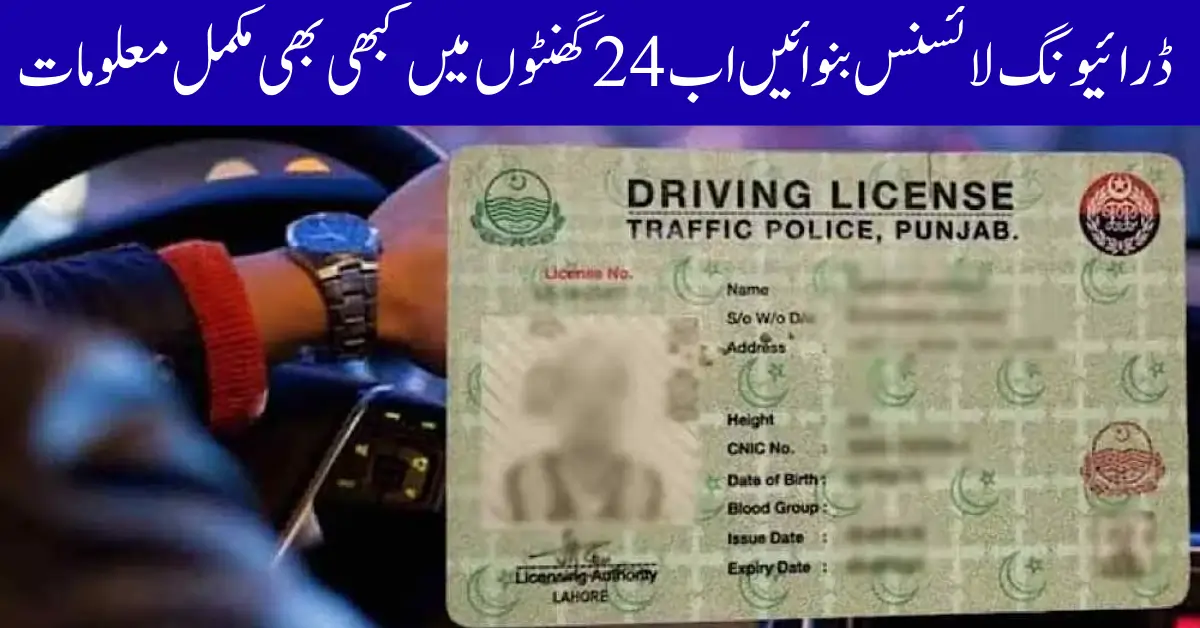
No More Backdoor Licenses
No More Backdoor Licenses process of getting a driving license in Lahore has gone through a major transformation in 2025. Lahore Traffic Police have introduced a new system that ensures complete transparency by recording every driving test 24/7. These recordings are stored permanently with the Punjab Safe City Authority, making sure that every attempt, success, or failure is part of a digital record. This development has been introduced to eliminate unfair practices that previously damaged the credibility of the licensing system.
For years, applicants often complained about favoritism, corruption, or the unfair rejection of their driving tests. In some cases, people even managed to obtain licenses without going through the proper test. With the new system in place, such practices are no longer possible. Every applicant is treated equally, and the outcome of the test depends only on their driving skills. This step marks a new beginning for safe, reliable, and professional driving standards in Lahore.

You Can Also Read: Punjab Crop Insurance Scheme 2025
Background: Problems with the Old System
Before the reforms, the licensing process faced several flaws. The lack of strong monitoring meant that test results could easily be manipulated. Footage of tests was deleted within a short period, making it difficult to review any complaints raised by applicants. Manual error detection also created opportunities for human bias, as the decision of passing or failing often depended on the examiner’s judgment alone.

Another big issue was the possibility of backdoor licenses. Individuals with references or connections sometimes obtained licenses without even appearing for a test. This practice not only reduced trust in the traffic police but also compromised public safety. Untrained drivers on the roads became a risk for both pedestrians and other drivers.
Key issues in the old system included:

- Footage deleted after 15 days, making reviews impossible.
- Limited and unclear camera coverage at test centers.
- Errors detected manually, leaving space for favoritism.
- Backdoor licensing through references and corruption.
You Can Also Read: BISP 8171 September 2025 Update | Rs. 16,500
The New System Key Features (2025)
The 2025 reforms have introduced a modernized system supported by technology and strict oversight. High-definition cameras record every single test without interruption, while vehicle sensors help detect mistakes more accurately. This recorded footage is directly linked to the Punjab Safe City Authority, where it is permanently stored for future reference.
One of the biggest changes is the use of AI-based vehicle sensors. These sensors track common driving errors such as sudden braking, missed indicators, or dangerous turns. By highlighting mistakes automatically, the system reduces the chance of bias and ensures a fair evaluation. In addition, the 24/7 monitoring leaves no space for manipulation, as the recordings are fully secured.
The new system now includes:
- Continuous video monitoring of every applicant.
- Permanent footage storage with Punjab Safe City Authority.
- AI-supported sensors to detect and record errors.
- Elimination of manual interference, making the process fair.
You Can Also Read: Maryam Ki Sawari 2025
Step-by-Step: How a Driving Test Is Recorded and Reviewed
The new licensing process follows a clear step-by-step system that guarantees fairness for all applicants. From registration to final evaluation, every step is recorded and stored for accountability.
- Registration – The applicant’s details are entered into the system and a driving test slot is assigned.
- Live Recording – High-definition cameras capture every moment of the test.
- AI and Sensors – Driving errors such as wrong turns or unsafe braking are flagged automatically.
- Archival – The test footage is securely transferred to the Punjab Safe City Authority.
- Result – Applicants receive their test outcome based on actual performance, not external factors.
- Review Option – If the applicant has concerns, the recorded video can be reviewed to ensure fairness.
This process builds confidence among applicants, as they know their performance is evaluated fairly and permanently recorded.
You Can Also Read: Punjab Raises Minimum Wage to Rs. 40,000
Old vs New System A Clear Comparison
To highlight the difference between the past and the present, here is a side-by-side table that compares the old system with the new reforms:
| Old System | New System (2025) |
|---|---|
| Footage deleted after 15 days | Footage stored permanently |
| Limited camera coverage | 24/7 high-definition video monitoring |
| Manual error detection | AI sensors flag mistakes automatically |
| Backdoor approvals possible | 100% merit-based passing only |
This table shows how directly the reforms address the weaknesses of the past system.
What the System Means for Applicants A Practical Checklist
For applicants, this system is both a challenge and an opportunity. Since the entire test is recorded and stored, there is no chance of unfair evaluation. However, this also means that applicants need to prepare more carefully to pass the test successfully.
Practical checklist for applicants:
- Practice parking, lane changes, signals, and safe braking.
- Ensure your test vehicle is in good working condition.
- Carry all original documents required for the test.
- Stay calm and follow traffic rules carefully.
- If you fail, review your performance and improve before reappearing.
By following this checklist, applicants can prepare themselves for the stricter yet fair testing system.
You Can Also Read: Google Gemini Nano Banana AI Saree Trend Step-by-Step
Complaint & Review Process
One of the most appreciated changes is the new complaint and review system. In the past, applicants had little chance of proving that their test was unfairly judged. Now, with permanent video storage, any applicant can request their test to be reviewed.
When a complaint is raised, the traffic police access the archived footage from the Punjab Safe City Authority. The footage is carefully examined to see whether the applicant performed well or made clear mistakes. The final decision is then based on the evidence from the recording, not on assumptions.
This process builds accountability and ensures that no applicant feels helpless if they believe their test was mishandled.
Benefits for Citizens and Road Safety
The reforms bring numerous benefits not only for individual applicants but also for society as a whole. By removing corruption and favoritism, the licensing process has become merit-based, ensuring that only trained drivers are allowed on the road.
Benefits for citizens include:
- Transparent and fair test evaluations.
- Equal treatment of all applicants without references.
- Confidence that performance decides the result.
Benefits for society include:
- Safer roads with skilled drivers.
- Reduction in traffic accidents caused by untrained drivers.
- Restoration of public trust in government institutions.
Risks and Limitations to Watch
Although the system is highly advanced, it does come with potential challenges. For example, over-reliance on AI may sometimes lead to technical errors. Similarly, permanent storage of video data raises questions about privacy and security.
You Can Also Read: CM Punjab Kissan Card Scheme 2025
Authorities need to ensure:
- Regular maintenance of cameras and sensors.
- Secure protection of video data from hacking.
- Transparent rules for accessing and reviewing footage.
If these measures are implemented effectively, the system can remain both reliable and trusted by citizens.


Conclusion
The permanent video monitoring system introduced by Lahore Traffic Police is a groundbreaking step for Pakistan’s licensing process. By using 24/7 cameras, AI sensors, and permanent video storage, the system ensures that no license is issued through unfair means. This not only strengthens the licensing process but also improves road safety and restores public confidence.
For applicants, the message is clear: prepare properly, follow the rules, and trust the process. For society, the benefit is long-term — safer roads, honest governance, and a future where only skilled drivers are allowed behind the wheel.