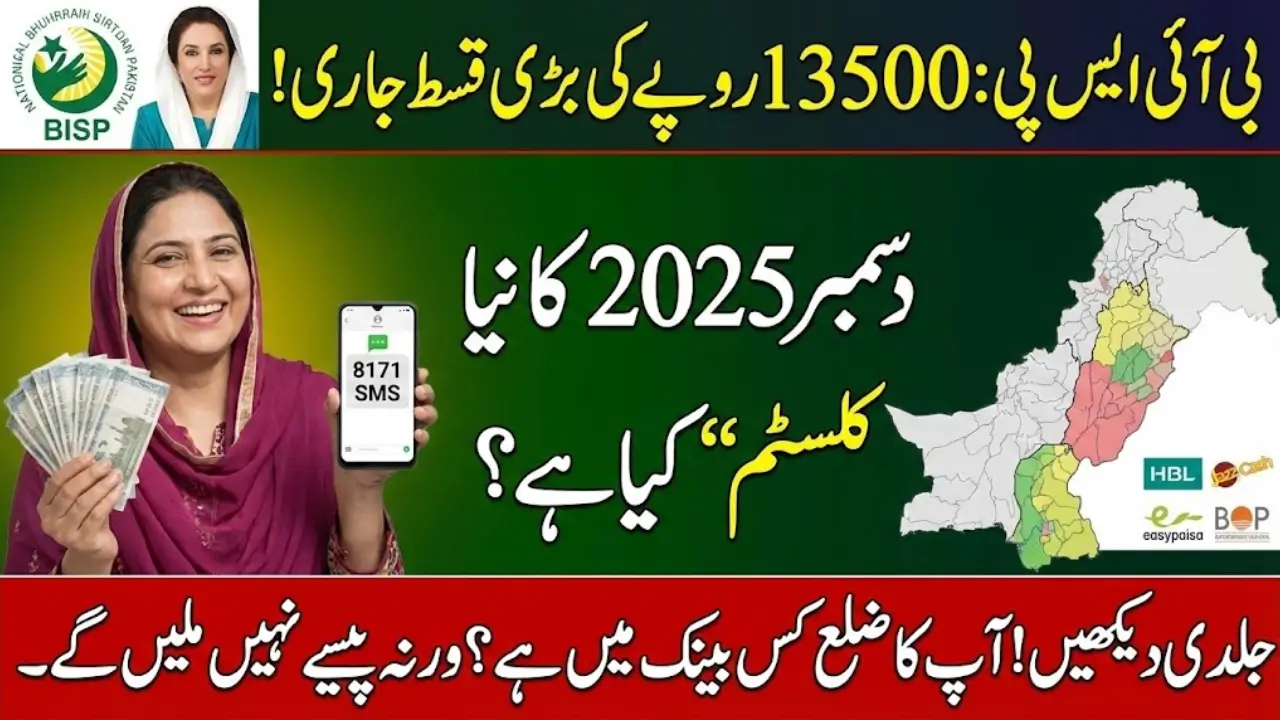
The Benazir Income Support Programme (BISP) continues to provide critical financial support to low-income women across Pakistan. For December 2025, the payment system has been upgraded with a more secure cluster distribution model, ensuring smoother, safer, and more transparent delivery of the Rs. 13,500 installment.

This new method organizes districts into clusters and assigns each cluster a dedicated bank or mobile wallet. The purpose is simple: reduce fraud, eliminate agent involvement, minimize long queues, and make the entire process predictable and stress-free.
What Makes the December 2025 Payment Different?
Increased Transparency & Security
The December 2025 cycle introduces strict digital oversight. Beneficiaries can easily check which bank is handling their district and avoid misinformation.
Why Cluster Distribution Was Introduced
The upgraded model aims to:

- Prevent unauthorized deductions
- Reduce overcrowding at payment camps
- Provide equal access to all eligible women
- Speed up payment release by dividing districts
You can also read: BISP Digital Wallet Payment Mathod Check Complete Details
Key Highlights of BISP December 2025 Payment
Installment Amount
Beneficiaries will receive a Rs. 13,500 installment, an increase that helps families manage rising costs of food, education, and medical needs.
Eligible Beneficiaries
The payment targets:
- Low-income women
- Households verified under the NSER survey
- Families approved under the Kafalat Program
Partner Banks & Wallets
The distribution involves multiple partners:
- HBL
- Bank of Punjab (BOP)
- JazzCash
- Easypaisa
- Habib Microfinance Bank
Understanding the New Cluster-Based Distribution System
The cluster distribution model divides Pakistan’s districts into manageable groups. Each group is assigned to a single bank or digital wallet to ensure organized and fraud-free distribution.
How Clusters Are Assigned
- Districts are grouped based on population and past traffic patterns
- Each cluster has a unique schedule
- Beneficiaries only collect payments from assigned bank partners
District-Wise Bank Allocation
This system ensures that no two banks overlap within a cluster, making the process efficient and reducing confusion among beneficiaries.
Cluster Distribution Table for December 2025
| Cluster | Partner Bank/Wallet | Example Districts | Status (December 2025) |
|---|---|---|---|
| Cluster 1 | HBL | Rawalpindi, Jhelum | Released |
| Cluster 2 | Bank of Punjab (BOP) | Multan, Khanewal | Ongoing |
| Cluster 3 | JazzCash | Karachi Central | Pending |
| Cluster 4 | Easypaisa | Swat, Mardan | Releasing Soon |
| Cluster 5 | Habib Microfinance | Hyderabad, Larkana | Processing |
This structure ensures clarity so women know exactly where and when to collect their payment.
Step-by-Step Guide to Check BISP Eligibility
Using the 8171 Portal
To verify your eligibility:
- Visit the official 8171 web portal
- Enter your CNIC number without dashes
- View your eligibility status
- Check cluster details assigned to your district
SMS Eligibility Check
An alternate method:
- Send your CNIC number to 8171
- Receive instant confirmation of your status
- Wait for the official payment SMS before visiting your cluster point
Payment Collection Process
Collecting your Rs. 13,500 installment is simple when done correctly.
Requirements for Biometric Verification
You must carry:
- Original CNIC
- Registered mobile SIM (NADRA-verified)
- Fingerprint verification for biometric payment
Safe Collection Tips
- Always collect payment from official bank agents
- Never pay extra charges
- Save the receipt or confirmation SMS
- Report deductions at the nearest BISP office
Important: The full amount belongs to you—no one can deduct a single rupee.
You can also read: Ehsaas Program Payment Increase
What to Do If Your Payment Is Delayed
Common Causes of Delays
- Cluster scheduling differences
- Biometric errors
- System overload
- District-specific release timelines
Solutions for Beneficiaries
- Re-check eligibility on 8171 portal
- Ensure your SIM is NADRA-verified
- Update fingerprints at NADRA if verification fails
- Visit BISP office for unresolved complaints
- Avoid agents promising “fast-track payments”
How to Apply or Re-Register for BISP 2025
NSER Survey Process
To apply:
- Visit BISP registration center
- Provide CNIC and family details
- Complete NSER survey interview
- Wait for verification and approval
Approval Timeline
- Initial SMS within weeks
- Successful beneficiaries added to the next payment cycle
Benefits of the Cluster System for Women
The new model strengthens transparency and boosts trust in the program.
Reduced Fraud
Cluster payments have significantly lowered:
- Agent involvement
- Unauthorized deductions
- Cash handling issues
Faster Access to Financial Support
Women no longer stand in long lines or wait for unclear schedules. Payments are now predictable and more organized.
Why BISP 2025 Matters for Low-Income Families
The BISP December 2025 installment is not just financial support—it is a lifeline. With rising inflation, the increased amount helps families manage essential expenses like:
- Food
- Education for children
- Medicine
- Household needs
It empowers women and strengthens the foundation of struggling households across Pakistan.
Conclusion
The BISP December 2025 Payment Cluster Distribution Process marks a major step toward fairness, transparency, and dignity for millions of Pakistani women. With the cluster system, payments are smoother, safer, and more organized. By checking eligibility online, knowing your cluster, and avoiding agents, you can ensure timely receipt of your Rs. 13,500 installment.
You can also read: Maryam Ke Dastak Program 2025
If your family is still unregistered, applying now ensures a stronger future under the BISP support system.
FAQs
Q1: What is the BISP December 2025 installment amount?
The installment is Rs. 13,500 per eligible family.
Q2: How do I check my eligibility?
Use the 8171 portal or send your CNIC via SMS to 8171.
Q3: What is the cluster distribution system?
It organizes districts into groups, each assigned to a single bank partner.

Q4: Can I collect payment from any bank?
No. Only from the bank or wallet assigned to your district’s cluster.
Q5: What documents are required?
Only your original CNIC for biometric verification.