
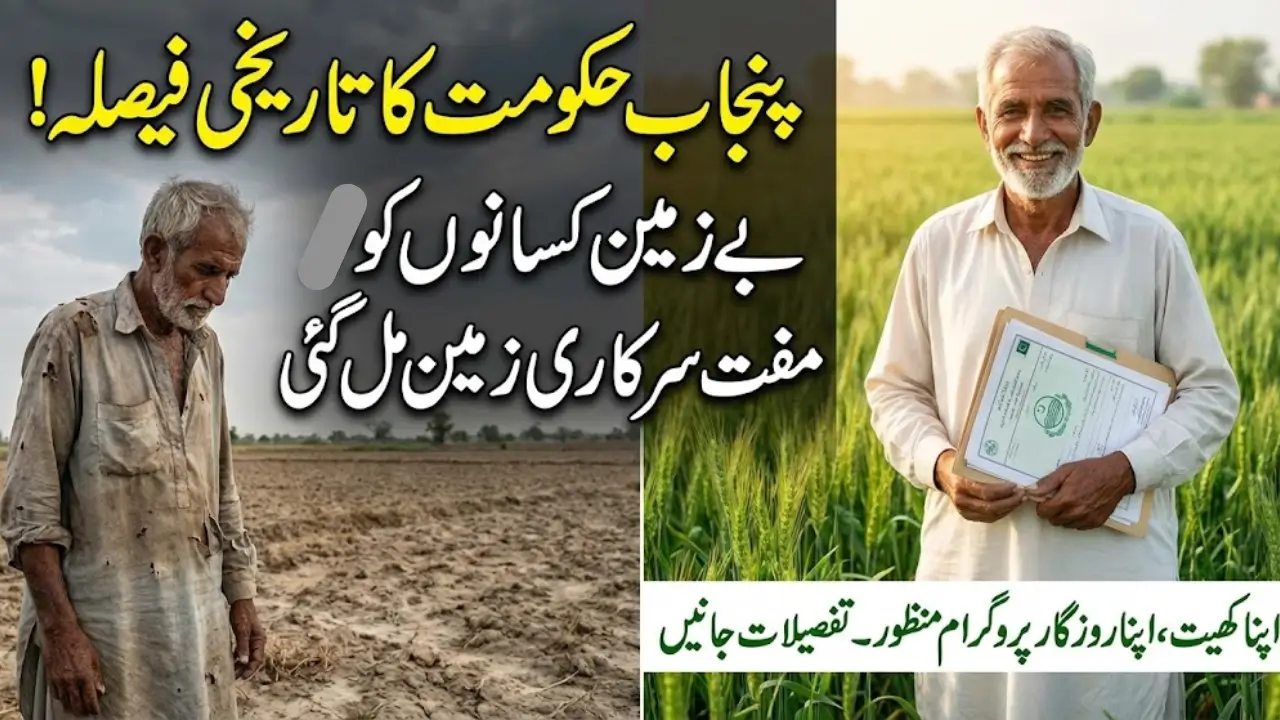
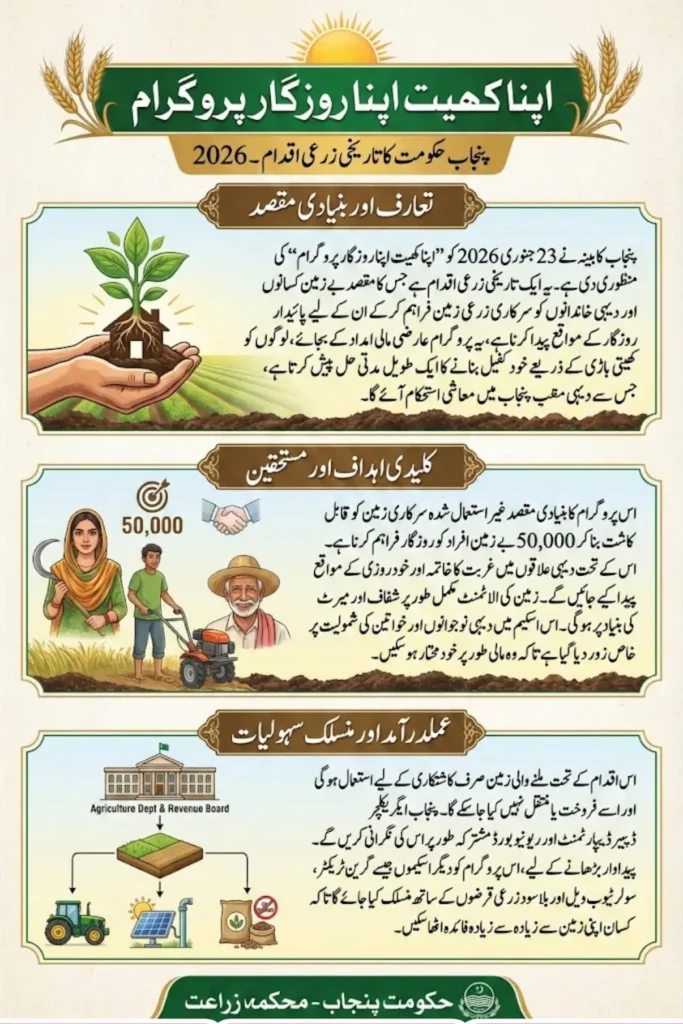
The Apna Khet Apna Rozgar Program is a landmark agricultural initiative approved by the Punjab Cabinet on January 23, 2026. This program has been introduced to support landless farmers and rural families who struggle to earn a stable livelihood due to lack of cultivable land. By allocating state-owned agricultural land, the government aims to create long-term employment opportunities in rural Punjab.
This scheme stands out because it directly connects land ownership with employment generation. Instead of providing short-term financial aid, the government is offering a sustainable solution that enables individuals to earn through cultivation, farming, and allied agricultural activities.
Government Vision Behind the Program
The program reflects the Punjab government’s broader 2026 agricultural reform agenda, which prioritizes public welfare over elite interests. Chief Minister Maryam Nawaz Sharif emphasized that government land should serve the people who need it the most, not remain underutilized or controlled by influential groups.
You can also read: Apni Chat Apna Ghar Scheme

By reclaiming and redistributing state land for productive use, the government aims to rebuild trust in public institutions while strengthening rural development. This vision promotes fairness, transparency, and economic inclusion at the grassroots level.
Key Objectives of Apna Khet Apna Rozgar
The main purpose of this program is to convert unused state agricultural land into productive farming units that directly support employment and food security. It is designed to empower individuals who have the skills to farm but lack access to land.
Core objectives include:
- Providing cultivable land to landless citizens
- Creating self-employment opportunities in rural areas
- Reducing poverty through sustainable agriculture
- Ensuring transparent and merit-based land allotment
Who Can Benefit from This Scheme
The program is specifically designed for 50,000 landless individuals across Punjab. These beneficiaries are expected to come from economically weaker backgrounds, including daily wage workers, unemployed youth, and rural women who want to become financially independent.
Special emphasis is placed on social inclusion. Women and young people from rural communities are encouraged to apply, ensuring that agricultural growth is shared across all segments of society rather than concentrated among a few.
Land Allotment Structure & Implementation
Under this initiative, verified applicants will receive state-owned agricultural land strictly for cultivation and livelihood purposes. The land will not be transferable or used for commercial resale, ensuring that it remains a tool for employment rather than speculation.
The Punjab Agriculture Department and Punjab Revenue Board will jointly manage land verification, allotment, and monitoring. This dual oversight system is expected to improve transparency and reduce misuse.
You can also read: Parwaz Card Official Website
Eligibility Criteria (Phase 1 – Expected)
Although the official portal is yet to launch, the cabinet has outlined clear eligibility guidelines to ensure fair selection. Applicants must meet strict land ownership and residency conditions.
Expected eligibility requirements:
- Applicant must not own any cultivable land
- Must hold a valid Punjab domicile
- Registration in PSER 2026 preferred
- Priority for low poverty score households
- Youth and women applicants will receive preference
Registration & Online Application Process
The registration process for Apna Khet Apna Rozgar Program is expected to be fully digital. Applications will likely be submitted through the Punjab Socio-Economic Registry (PSER) or a dedicated agriculture portal launched by the government.
Once applications open, submitted data will be cross-checked with land records and socio-economic databases. Only verified candidates will move to the allotment phase, ensuring fairness and accountability.
Integration with Other Agricultural Schemes
This program is not standalone. The government plans to link allotted land with ongoing agricultural support schemes so beneficiaries can maximize productivity and income.
Linked initiatives include:
- Green Tractor Scheme Phase III
- Interest-free agricultural input loans
- Solar Tubewell Program for irrigation support
Key Agricultural Programs in 2026
The Punjab government has launched multiple agricultural initiatives alongside this program. Applicants are encouraged to stay informed about these opportunities to strengthen their farming capacity.
| Program Name | Key Benefit | Status (2026) |
|---|---|---|
| Apna Khet Apna Rozgar | State land for livelihood | Approved |
| Green Tractor Scheme | Subsidized tractors | Active |
| Laser Land Leveler | Rs. 600,000 subsidy | Active |
| Solar Tubewell Program | Low-cost irrigation | Active |
Impact on Rural Economy & Employment
The Apna Khet Apna Rozgar Program has the potential to transform rural Punjab by creating thousands of self-employed farmers. With access to land, beneficiaries can generate income, improve food production, and reduce dependence on government aid.
You can also read: Punjab Parwaaz Card Eligibility
Over time, this initiative is expected to strengthen local economies, reduce rural-urban migration, and promote sustainable agricultural practices across the province.


Conclusion
This program represents a shift from temporary relief to long-term empowerment. By giving land instead of handouts, the Punjab government is enabling citizens to build dignified livelihoods through agriculture.
For landless individuals in Punjab, Apna Khet Apna Rozgar Program is more than a scheme—it is an opportunity to secure employment, stability, and a better future through ownership and productive use of land.